Sonia Mossu Guerrero The Emotional Architecture Method™ Hospitality Experience Consultant · Paris · Palm Beach

Your standards are met. Your experience is not felt. I find where it breaks. And I fix it.

A diagnostic for where premium hospitality breaks — and the plan that closes it.

Book a 20-minute call → By appointment · Confidential · No deck required
Prior Work Hulu · Warner Bros · Netflix · Stranger Things & Friends Paris (immersive experiences)
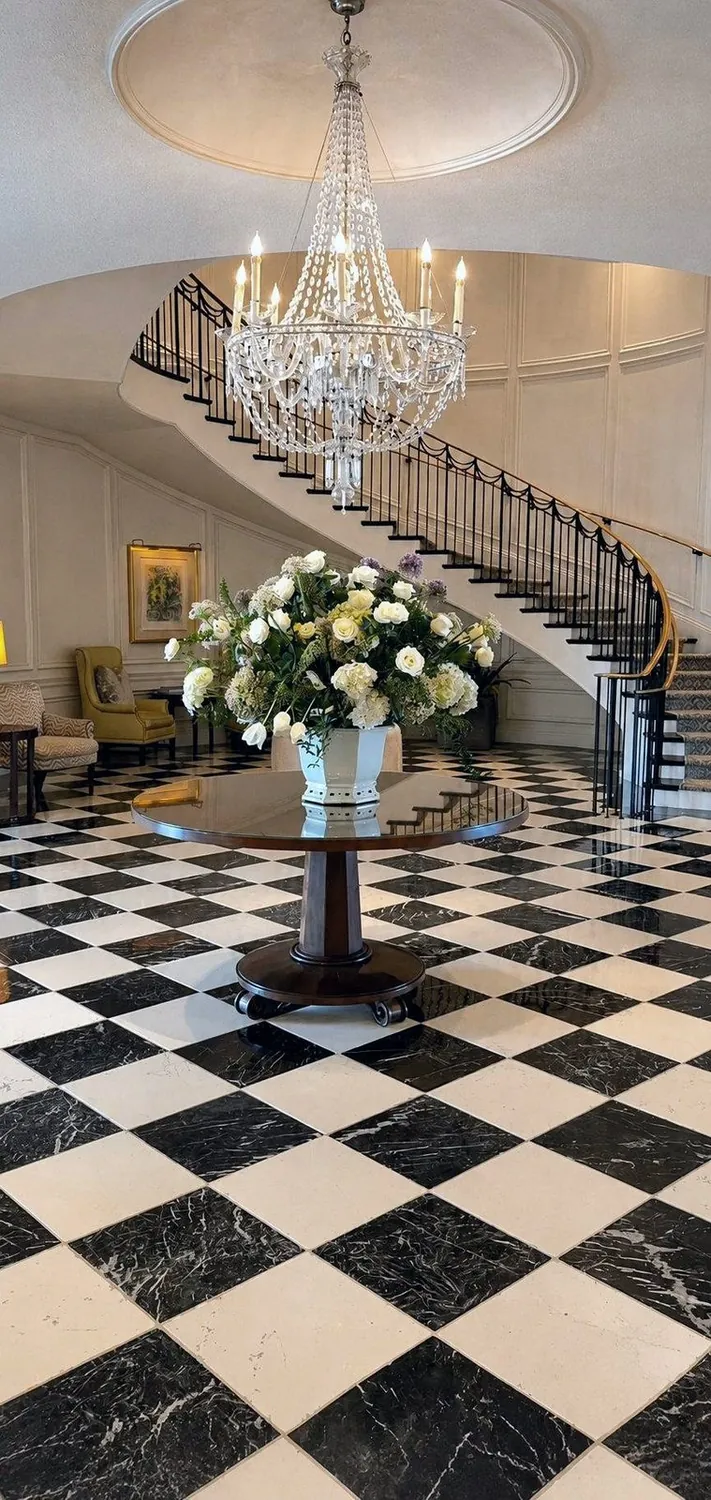
Cream arches with white blossom — contemplative threshold
What a guest feels as richness is a decision made months before they arrive.
This is where you are

You will recognise at least one of these.

  • "Something is off. Every audit passes. Guests still leave something unfinished."
  • "It depends on who's on shift."
  • "The team was retrained. Nothing changed."
  • "We open in 60 days. I'm not confident the team can carry the concept under pressure."
  • "The concept is beautiful. I'm not sure guests are feeling it."
  • "Reviews are nearly perfect. Return rate is flat."
A composite, drawn from the work

A 73-key boutique in the Marais opens at 9.1 LQA. Press is strong. By month four, return rate is 18% — against a category average of 31%.

Guests photograph the staircase. They photograph the lobby bar. They almost never photograph the guestroom.

The fracture is at the threshold of the room: the lobby holds atmosphere, the corridor carries it, then the door opens and the choreography breaks — the welcome line, the timing of the offer, the way the tray is set down. Concept is being met where a checklist looks. It is collapsing where the body decides whether to return.

This is the gap the diagnostic finds.

You can copy the marble.
You cannot copy the feeling.

The body knows the difference before the mind does. Guests rarely explain it — they simply don't return.

The Emotional Architecture Method™

What this is not: interior design · brand strategy · training delivery · generic management consulting.

Four phases.
One diagnostic eye.

Most diagnostics give you findings. I give you findings and an operating plan that translates each one into what your team actually says, decides, and does in live conditions.

Phase 01 Foundation

Diagnose

Find exactly where the experience breaks — across standards, sequencing, live delivery, team behaviour, and leadership reinforcement.

Phase 02 The Differentiator

Translate

Convert each finding into operating language each role can act on. Touchpoint by touchpoint. Decision by decision. With named ownership.

Phase 03 Implementation

Implement

Embed the plan through the team — guest journey, role-by-role behaviour, leadership reinforcement. The work runs in live conditions, not in a deck.

Phase 04 Confirmation

Verify

Re-run the scorecard against the baseline. Confirm what landed is operating without dependence. Recalibrate where drift starts — before guests name it.

Phases of the work, not separate services. Each engagement moves through them at the depth required.

Antique Paris palm court — green tufted sofa, garden view, ornate carpet
A room that does not need to perform its history. Believability is older than design.

Four moments
that call for
this work.

The work begins with a specific operational moment — not a job title. The right question is not "what role are you?" but "what are you facing right now?"

Pre-Opening · 60–90 Days Out

"We open in weeks. The team is trained. I still don't believe they can carry the concept when it matters — when a guest pushes back, when the rush hits, when leadership isn't there."

For GMs and Directors of Operations approaching an opening who want an objective readiness assessment before the first guest sets the baseline.

Post-Opening · Something Is Off

"Something is wrong and I cannot name it. The scores are fine. The concept is strong. Guests aren't returning at the rate they should be."

For operators who know something is wrong but cannot locate it — and have no current tool precise enough to find it.

Owner or Investor

"The property is underperforming relative to what the concept should be producing. I need an independent view before I decide whether to invest further or reposition."

For owners and investors who want an outside diagnostic before renovation, repositioning, or an ownership transition.

Incoming Leadership

"I've just taken over. Something broke under previous management and no one documented what it was. I need to understand the actual state of delivery before I decide what to change."

For new GMs and Directors of Operations onboarding into a property that has experienced inconsistency or drift.

Four services.
One diagnostic eye.

Each service enters at a different moment. All are grounded in the same diagnostic: finding exactly where the concept stops being felt.

Diagnostic delivered in 2–3 weeks, depending on property size. Implementation scoped after.

Service 01

Experience Diagnostic

A pressure-test of whether your concept will survive contact with daily delivery — before opening, or once something is off.

What you receive:

  • A Diagnostic Report naming exactly where the experience breaks
  • A Priority Action Plan, ranked by commercial impact
  • A Delivery Risk Map across all six experience dimensions
  • A 90-minute working debrief with you and ownership

Two entry points. One diagnostic eye.

Pre-opening Experience Diagnostic — 60–90 days before doors open. I pressure-test whether the concept can survive opening night, before the first guest sets the baseline.

Experience Delivery Diagnostic — for properties already open. I find exactly where the intended experience is breaking and what is costing return.

Most useful when you are about to open and want an objective readiness baseline, or when something is off and no one on your team can name it precisely.

Service 02

Standards & Systems Correction

An implementation engagement. Not a deck. The operating layer is rebuilt — guest journey, SOPs, role design, sequencing, accountability — and the human-layer touchpoints that depend on them.

What this engagement produces:

  • Guest Journey Map — sequenced, role-assigned, pressure-tested in live conditions
  • Service that no longer depends on who is on shift
  • SOPs your team executes without asking permission
  • Quantified reduction in shift-to-shift variance
  • Role design that survives turnover — documented, transferable, embedded

This is implementation, not a deck. The work runs alongside your team — rebuilding the structural layer and tuning the human-layer touchpoints that ride on it, in live conditions, until the corrections are operating on their own.

Includes: full Guest Journey Map, sequence redesign, role-by-role accountability loops, post-training reinforcement cycle, and a stabilisation scorecard your managers run after I leave.

Most useful when retraining has not stuck, when scores look fine but variance is high, or when the property has scaled past the founder's daily presence.

Service 04

Quality Continuity Advisory

A quarterly retainer that catches drift before it costs reviews — across seasonal turnover, manager change, and second-property expansion.

What this engagement produces:

  • Drift detected before it costs revenue — before guests name it in reviews
  • New hires absorbed in weeks, not quarters
  • Property #2 opened without diluting property #1
  • The concept survives a manager change — without you in the room

A protective layer, not a maintenance contract.

Quarterly scorecard re-runs against the original baseline. Leadership recalibration. Early-warning escalation the moment critical drift is identified — before it costs reviews, rate, or returning guests.

Entry condition: an implementation engagement is complete and a named internal owner is in place. Six-month minimum.

Some properties run five staff to every guest.
The experience still breaks.
More people is rarely the answer. The right translation is.

Book a 20-minute call → By appointment · Confidential · No deck required
Booking confirmation, itinerary, passport — the journey before arrival
The diagnosis begins before I arrive — the property's digital presence, guest-facing language, and brand signals are read before the first site visit.
Vaulted hallway with hanging lantern - threshold making the arrival decision
"The threshold decides who the guest is by the time they arrive."

When the concept is being carried correctly, guests become the campaign.

Not because the property asked them to.
Because something happened to them
that they needed to share.

What changes when the work has landed.

These are the patterns the property starts to show — externally, internally, and commercially — once the diagnostic and operating plan are in motion.

Not as a vague feeling. Not as a matter of taste. Not only through scores or audits — but in guest language, service consistency, journey ease, team understanding, leadership visibility, and commercial protection over time.

Pre-launch — what surfaces before opening

Standards in a binder are not the same as standards in service. Before opening night decides for you, the diagnostic finds where the seams are — the handoffs, transitions, and pacing decisions that look correct on paper but stumble under live guest conditions.

Delivered as a Diagnostic Report with a ranked Priority Action Plan: what must be fixed before opening, what can be corrected in the first sixty days, and how to protect the rate ceiling for the next twelve months.

"When a room is working,
you feel it before
you understand it."

Concept integrity is measurable — not just in review scores, but in how quickly a body settles into a room, and whether guests photograph the space or perform in it.

The signals are already there.
"When the room is breathing, the body settles before the mind has language for it."
External — what guests do

Praise becomes specific. Not "lovely time" but "the way the floor manager handled the table change." Reviews start naming the moments, not the property.

The journey carries the guest instead of testing them. Recoveries feel owned and human, aligned with the promise. Unprompted sharing increases — not because the property asked, but because something happened that the guest needed to carry outward.

Internal — what leadership notices

Staff stop describing what they do and start describing what the room is for. The vocabulary tightens. Coaching becomes precise — managers correct specific behaviours, not vague ideals.

Service stops being personality-dependent. The experience stays consistent across shifts, departments, and team members. Drift is named earlier — recurring issues become visible before they become reputation problems.

Commercial — what owners and investors can measure

Rate integrity strengthens — the property becomes less reliant on discounting to compensate for weak differentiation. Repeat and direct booking behaviour grow: guests return to the property specifically, not just to the category.

Premium positioning becomes easier to defend. Owner confidence improves — leadership can point to clearer patterns, priorities, and correction paths instead of relying on intuition.

The work does not promise to control every commercial outcome. It strengthens the conditions that protect them.

Book a 20-minute call → By appointment · Confidential · No deck required
Bellman with brass luggage cart in lobby - the carrier of the experience
"The standard travels through the people who carry it. The transmission happens in the rhythm of how the work moves — or it doesn't happen at all."

Three observations
from the work.

What coherence requires — named precisely, drawn from properties.

01.

On the threshold.

The lobby is rarely the brand. The lobby is the rehearsal. The brand is decided three meters past the front desk — at the moment a body has to choose whether to settle or stay alert. Properties that score perfectly on entry routinely lose the guest at the corridor. The fracture is rarely visible to the people working in it.

02.

On transmission.

Most concepts do not fail at the level of design. They fail at the level of transmission — the chain from founder to GM to floor team to the body of the guest. A concept that cannot be carried by a tired person on a Tuesday at 3pm is not yet a concept. It is a wish.

03.

On the photograph that does not happen.

Guests photograph what surprises them. They do not photograph what was promised. The absence of a photograph is the diagnostic — not the negative review. By the time a review names the problem, the loss has already been priced in.

The Emotional Architecture Method™

A room can be doing more work than the people in it. The atmosphere holds; the team does not carry it.

Most experiences break in the seam between two roles. That seam is where the concept stops being transmitted.

Properties tell you what they are. The brand speaks first. The room either confirms it or contradicts it.

I have always been sensitive to the moment when something looks right but does not feel true.

That sensitivity is the thread behind my work.

A concept does not hold because it was well designed. It holds because someone made thousands of small decisions correctly, every day, for months.

I grew up around a small family bakery in New York. Not luxury. But it taught me early that an experience is held by timing, rhythm, warmth, and whether the person behind the counter actually feels present. I was watching the invisible layer before I had language for it.

Accounting and audit gave that sensitivity a structure. I learned to follow the trail — where the process breaks, where the document stops matching reality, where small inconsistencies become expensive patterns. That discipline has never left me.

Then Paris.

Thirteen years. A city where the standard for how something feels is embedded in daily life and immediately felt when it is absent. I learned to feel the difference between a place that delivers what it promises and a place that only looks like it does.

For the Stranger Things and Friends immersive experiences in Paris, I built and sustained the culinary world — four on-site restaurants carrying the concept into what guests tasted, smelled, and felt. Not decoration. The sensory layer that either made the world believable or broke it.

They were worlds kept alive for five to six months at a time — a thousand guests an hour. I learned what it takes to sustain an experience on a Tuesday in month four, when the edges start to soften and the only thing keeping the world intact is whether the people carrying it still understand why it matters.

For Hulu, I worked as a culinary producer on a reality production in the French countryside. Two months. Every detail held under the scrutiny of the lens.

You cannot replicate the feeling. The body knows the difference before the mind does.

My neurodivergence sharpened the pattern recognition further. I notice inconsistencies quickly — in tone, pacing, atmosphere, the subtle moments where an experience starts to lose coherence. I also read rooms closely. Shifts in tension, silence, warmth, rhythm — before they are spoken. For a long time that felt personal. Now it is part of how I work.

Where does the intended experience stop being carried?

Today I work at the layer beneath aesthetics. I help luxury hotels, member clubs, wellness retreats, and experience-led properties identify where the promise weakens between concept, standards, team behavior, and daily execution.

Before the conversation.

What is a hospitality experience diagnostic? +

It is not an audit. An audit checks whether standards are being met. A diagnostic identifies where the intended guest experience breaks between concept, standards, team behaviour, and daily delivery — and produces an operating plan the team can execute.

How is this different from a hotel audit, an LQA review, or a training programme? +

Audits report on past performance against a checklist. LQA reviews benchmark service standards. Training delivers content. This work locates the specific moment where the concept stops being transmitted — and translates that finding into operating language each role can carry. It is implementation, not reporting.

How long does an engagement take? +

The diagnostic is delivered in 2–3 weeks (2–5 days on site, depending on property size). Implementation engagements (Standards & Systems Correction or Concept Embodiment Implementation) are scoped after the diagnostic, when we know what the work actually requires. Continuity is a 6-month minimum quarterly retainer.

Do you work outside Paris and Palm Beach? +

Yes. The practice is based in Paris and Palm Beach, with active engagements across France, Italy, and the United Kingdom, and selective work in Denmark, Sweden, Norway, Iceland, Switzerland, and Caribbean island properties. Travel is built into the diagnostic — the property is read on site, in live conditions.

What does the work look like in practice? +
  1. 01. Fit conversation. A short call to understand the property, the challenge, and whether the work fits.
  2. 02. Proposal + scope. If there is a fit, you receive a proposal with the recommended scope, timeline, and fee.
  3. 03. Diagnostic review. I read the gap between the experience the property promises and the experience guests actually receive.
  4. 04. Report + priority roadmap. A report showing where the experience holds, where it is drifting, and what to correct first.
  5. 05. Implementation advisory. When needed, a focused 30–60 day advisory period helps leadership translate the findings into operating corrections.
  6. 06. Follow-through. The goal is not to leave you with observations — it is to help the property correct what is weakening the lived experience.

What follows.

From the first conversation to the work running without me in the room.

01.

Fit conversation

A short call to understand the property, the challenge, and whether the work fits.

02.

Proposal + scope

If there is a fit, you receive a proposal with the recommended scope, timeline, and fee.

03.

Diagnostic review

I read the gap between the experience the property promises and the experience guests actually receive.

04.

Report + roadmap

A report showing where the experience holds, where it is drifting, and what to correct first.

05.

Implementation advisory

When needed, a focused 30–60 day advisory period helps leadership translate the findings into operating corrections.

06.

Follow-through

The goal is not to leave you with observations — it is to help the property correct what is weakening the lived experience.

What is felt is what is remembered.
The rest is just operations.
Two staff opening an art-nouveau door — the threshold from inside out
"The same door. The conversation begins on either side of it."

If this is where you are,
let's talk.

A first conversation. No proposal, no commitment.

What you should bring: the moment you noticed it was off.
The thing you can't quite name yet.

Book a 20-minute call → By appointment · Confidential · No deck required