Concept Stewardship
The studio defines the creative premise. Sonia defines what must become explicit, actionable and reinforced for the organization to carry it.

I produced the culinary experience and ran the logistics for long-running immersive productions in Paris — worlds connected to Stranger Things, Friends, and Hulu. Four venues under one world, kept alive for months, up to a thousand guests an hour.
Nobody came to see the drawings. They came to be inside the thing. Which meant the creative premise had to survive staffing changes, supply constraints, shift handoffs, peak periods and service recovery — on a Tuesday in month four, with a room full of people who had been promised something specific.
I have been on your side of the brief, and I have been on the floor at nine in the evening when it was being tested. That is the whole reason I read the interval the way I do.
The interval nobody owns
A concept leaves the studio as a coherent whole. The organization receives it as hundreds of separate decisions: staffing, service timing, handoffs, recovery, maintenance and management reinforcement.
Each decision may be reasonable on its own. Together, they can quietly change what the property feels like and what the guest is being asked to believe.
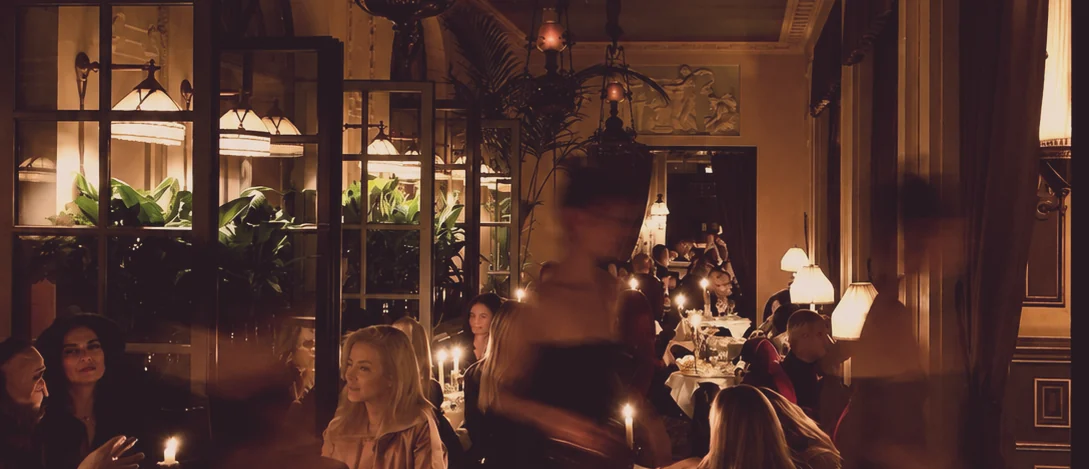
Where concepts leak
- Spatial intention becomes a staffing, flow or efficiency decision.
- Ritual becomes procedure while its emotional purpose disappears.
- A service promise is divided across departments without clear ownership.
- Sensory intention becomes a maintenance decision.
- Standards preserve the action while losing the judgment behind it.
Guests experience the concept and its delivery as one thing. They cannot see where the divergence began.
Three points of entry
What must become explicit before the creative team leaves.
What standards, handoffs and leadership must be able to carry.
What survived, what changed, and what correction now requires.
The work begins after the creative premise has been established. It does not replace concept creation or brand strategy.
- Defined
- Documented
- Handed off
- Interpreted
- Compressed
- Diagnosed
- Requirements defined

Between your final walkthrough and the guest's first night, the concept changes hands perhaps a dozen times. Nothing in that chain is malicious and nothing in it is documented.
Each person receives what was written down and improvises the rest. The improvisation is where your design goes.

The partnership
The studio brings the original creative intent. The commissioning client provides the operating context and access. The work independently identifies what remained legible, what became difficult to carry and what must now become operationally explicit.
The findings belong to whoever commissions the work. Where the client commissions, your studio receives what relates to the concept and its delivery. The diagnostic itself — the dimensions, the sequence, the instruments — stays with me.
Watch a concept change hands six times.
The same handoff chain described above, followed one step at a time — where the intent thins, and which decision puts it back.
Open the interactive →What your studio gains

The market never sees your drawings. It sees a room at nine in the evening, prepared by someone who was not in the room when the concept was explained.
That is the version your portfolio is judged on. It is also the version nobody has been asked to protect.
- Creative premise
- Emotional intention
- Design and brand language
- Concept documentation
- Concept non-negotiables
- Guest-visible requirements
- Critical decisions and handoffs
- Correction requirements and decision ownership
- Daily execution
- Staffing and deployment
- Recovery under pressure
- The concept, on an ordinary Tuesday
What returns to the studio
The commissioning client receives prioritized operating requirements, decision ownership, and the evidence behind each recommended correction.
At handoff. Before opening. Once the property begins to live.
The studio refers. The commissioning client owns the findings. The right point of entry depends on what has already been decided.
A related practice, Hospitality Content Strategy & Social Direction, reads the same property for what its experience gives the brand credible permission to communicate.