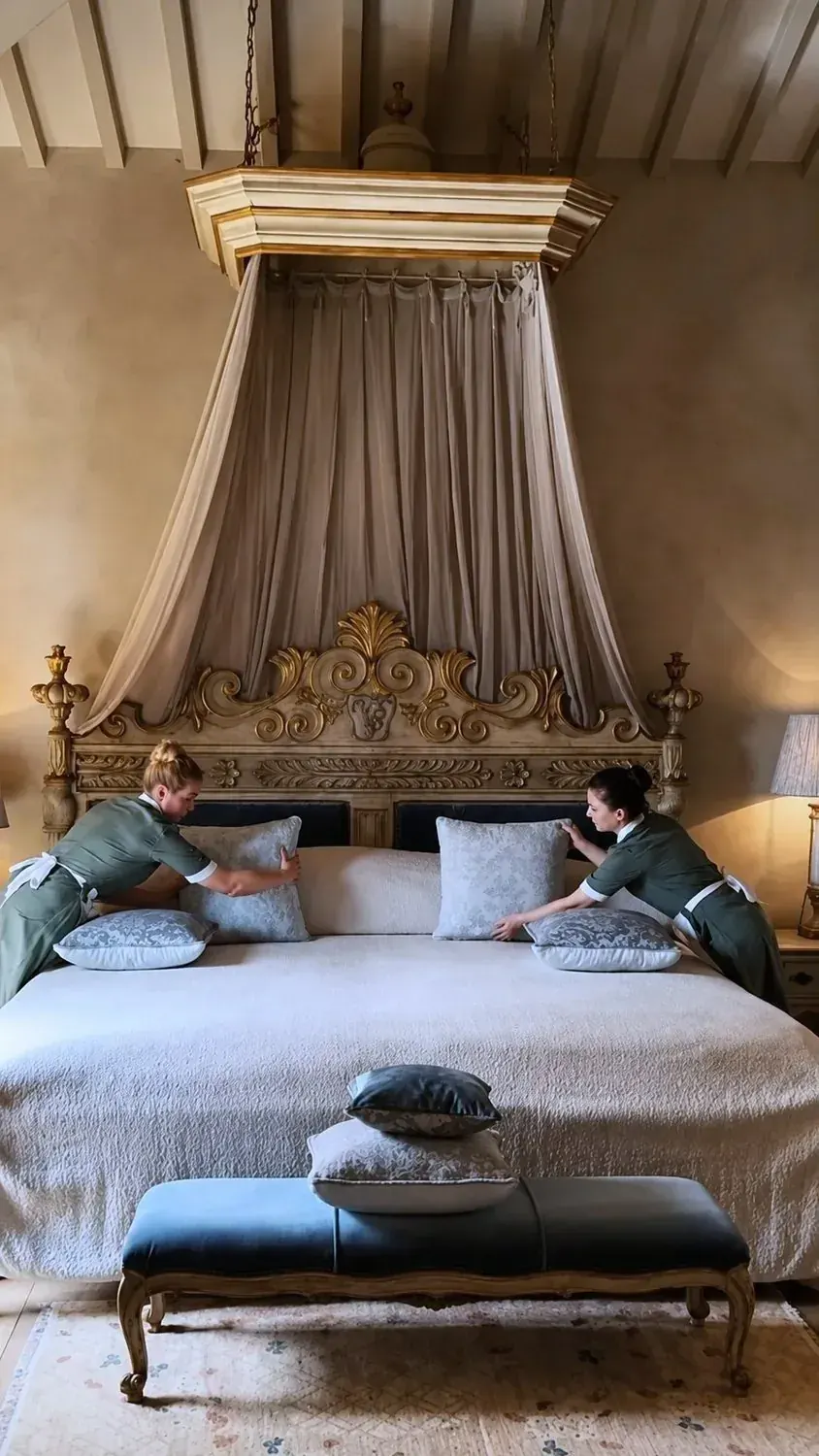
- The promise
- Restoration. The guest is released from effort.
- The distance
- Four moments across two days each returned the effort to the guest — to be observed, to be instructed, to be left alone, to fill the silence.
The promise is restoration. Four things happen across two days, none of them a mistake.
At dinner, a second glass of wine is noticed — warmly, out loud. Nothing is said about it. The observation is complete on its own. Restoration has become judgment.
On arrival the stay is explained: how to use the mornings, how to approach the treatments, how to rest. Permission to withdraw has become instruction.
In the spa, staff keep their distance to protect privacy. Nobody comes. Privacy has become abandonment.
And on the table, a guest fills the silence with conversation — not because they want to, but because the silence feels like something they are supposed to manage on behalf of the person standing over them.
One sentence would have released them: feel into your body, let the tension go. Nobody had been given the authority to say it.
A refined restaurant, lounge, or hotel bar is meant to feel composed, warm, unhurried. The room supports the feeling. The lighting is right. The table setting is right. The tone is restrained. The premium promise is in the air.
Then service enters.
The greeting happens. The sequence is followed. The language is polite. The timing is acceptable. But the pace carries pressure. The body language is task-finished. The attention stays on completing the step. The team moves through the room instead of holding the room.
Staff understand the service step, not the emotional responsibility of the moment. The room remains technically correct and loses its register. The guest receives service, not the intended experience.
This is the pattern a property has when every audit passes and direct booking confidence still weakens. The standard is met. The character is missing. Reviews stay positive but become generic. The property reads correctly and does not get chosen again.
Service character lives in the sensory environment, the ritual moments, and the recoveries. It tracks the pace of a server’s body language in a half-full room, the tone of the concierge correcting a billing error at 11pm, the language a floor manager uses when a request is declined, and the rhythm of attention across a four-hour service.
Why character holds the rate when standards alone cannot.
- Premium justification. is a felt outcome before it is a financial one. Guests pay for the felt distinctiveness — not the descriptive luxury.
- Emotional differentiation. is the asset boutique and concept-led properties cannot compete without. Scale belongs to chains.
- Direct booking confidence. rises when guests can name what makes the property specific. Generic admiration does not convert.
- Brand equity. is the layer that survives a refurbishment, a team rotation, a season, an ownership change. The most durable asset on the balance sheet.

Without service character, the property settles into weakened differentiation. The promise is poetic. The performance is generic. Pricing power becomes harder to defend — not because the rate is wrong, but because the guest can no longer feel why it exists.
The Service Character Design engagement is the direct response to this distance. It does not deliver more training. It defines the character the service must perform — tone, pace, presence, judgment, language — and rehearses it into the team in real shifts. It builds the character as an instrument the team measures itself against, so the standard travels through the people instead of around them.
The character becomes the way the team measures itself. The standards stay the same. The way they are performed changes. Repeat demand strengthens. Reviews become specific. The premium becomes self-evident again.
The quickest way to know is to describe what you intended — and what guests are actually meeting in the room. A 20-minute conversation is enough to begin.
Character is what makes a property remembered. Admiration without conversion means the property is being respected — but not returned to.
Four different symptoms, one root: nobody was given the authority to grant permission. Which means the following will also hold.
- The standards describe what staff should do and never what the guest should be released from. Check any treatment protocol for a single line about ending the guest’s social obligation.
- Warmth and observation are treated as the same skill. They are opposites here — one gives the guest room, the other takes it.
- Distance is the default correction for every complaint about intrusion, because it is the only lever anyone has been given.
- Your most experienced practitioner does none of this. They have found the sentence on their own and never told anyone.
A property selling restoration cannot leave permission to instinct. Permission has to be given — and a guest cannot take it from someone they perceive as serving them.