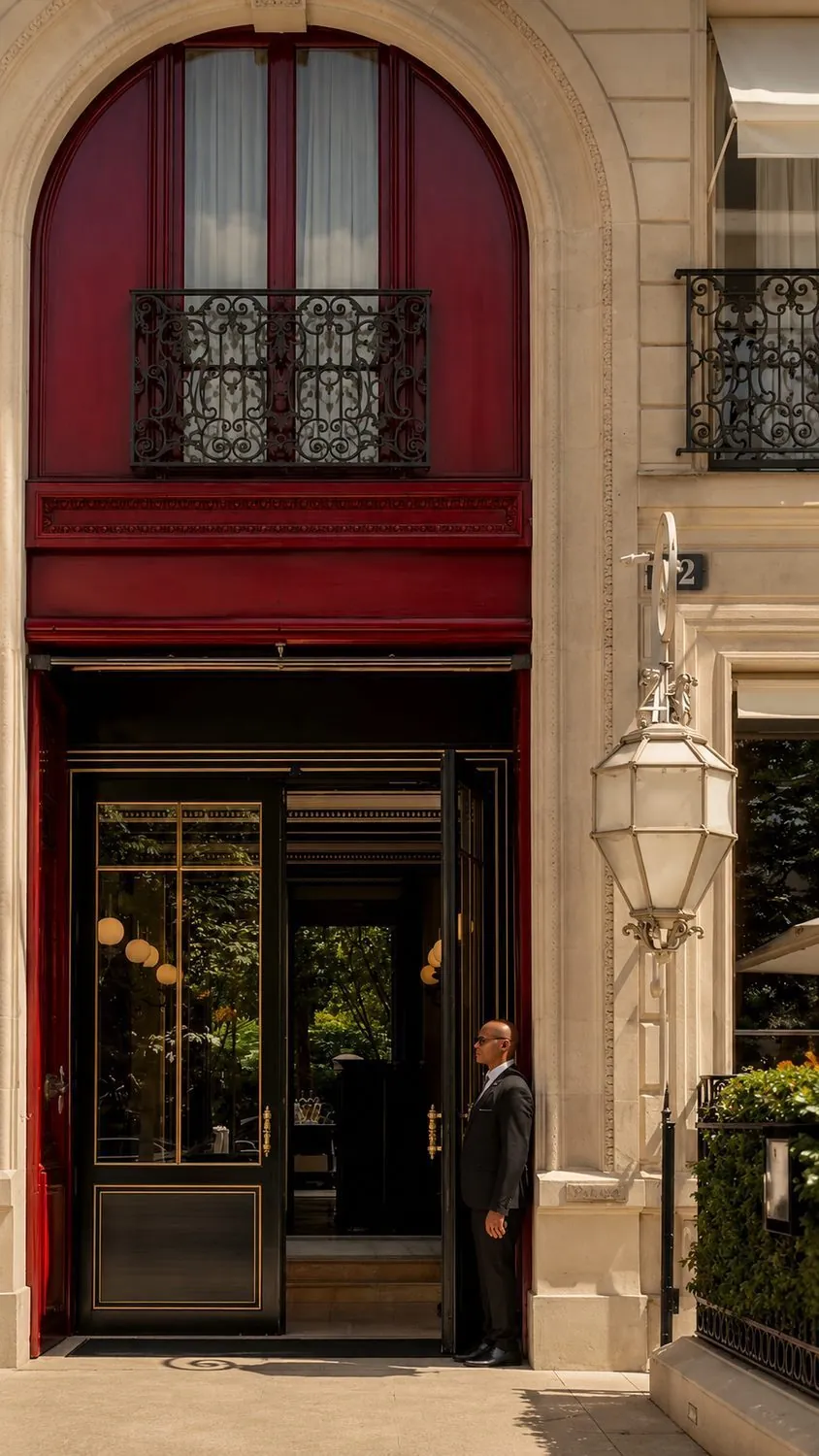
- The promise
- An unhurried arrival. The guest is received, not processed.
- The distance
- The ritual was delivered on schedule to someone who could not receive it. The promise was performed rather than read.
A guest reaches reception after an overnight flight, delayed. The welcome drink arrives, and with it the ingredients and the origin story.
The guest holds the glass without drinking. Looks toward the lift. Moves their luggage closer to their body. The explanation continues to the end.
The ritual was designed to slow the arrival down. What the body was asking for was permission to leave.
The lobby is rarely the brand. The lobby is the rehearsal. The brand is decided three meters past the front desk — at the moment a body has to choose whether to settle or stay alert.
Nothing in that arrival was done incorrectly. The drink is on the standard sheet. The story is in the training. Both were delivered accurately, to a person who could not receive them — because the ritual was scheduled rather than read.
A wellness hotel positions arrival as calm and restorative. The lobby supports the promise: low light, controlled scent, soft material. The room itself asks the guest to slow down. The premium promise is intact.
Then check-in ends. The corridor feels unattended. The handoff to the room is functional. Information is given. The transition is not carried. The guest starts looking for cues instead of settling into the experience.
Arrival has been designed as a visual moment, not as a full transition. The property loses calm at the exact moment it should be deepening it. The body becomes alert again before the experience has fully begun.
This is what standards drift at the arrival moment looks like. Every audit will pass. Every step in the LQA checklist will be ticked. The guest’s body will know something else.
The commercial consequence is rarely visible in week one. It shows up in softer return desire, in reviews that name the design and not the stay, in a direct booking rate that drifts down without anyone being able to say why. Admiration without conversion. Beautiful arrival photos. Flat repeat demand.
What the arrival sequence either earns or surrenders.
- The opening premium. is set in the first ninety days. Weak delivery in week one makes the premium harder to defend in month six.
- Return desire. is decided faster than guests realize. A flat arrival cannot be corrected by a strong room or a strong meal.
- Review specificity. comes from the moments guests can name. The arrival is the most quoted moment of the stay.
- Repeat demand. depends on whether the guest left feeling recognized — by name, by preference, by register. Not by greeting alone.

The arrival moment is one of the dimensions the diagnostic reads. It tracks the handoff between front desk and floor, the choreography of the first three minutes, the sensory continuity from public to private space, and whether the team carries the concept or only completes the steps.
The correction is rarely an expensive redesign. It is almost always a structural change to the transition between two moments: the way the concierge says goodbye, the way the floor team says hello, the language used between them about the guest, and the pacing of what happens in the corridor before the room door opens.
When the arrival moment is held, rate integrity strengthens — the guest can feel why the property earns its premium from the first three minutes. When it isn’t, the property pays twice. Once in recovery. Again in lost return.
If you can describe the first three minutes a guest experiences after the door opens — second by second, role by role — you have an answer. Most properties cannot. That distance is the diagnostic.
An arrival is not a procedure. It is the property’s first declaration of what it intends to be.
Three other things are almost certainly also true. None of them will appear in a review, and all three can be checked before the end of the week.
- The arrival sequence is timed rather than conditional — there is a version for every guest and no written version for a tired one.
- Nobody on the floor can tell you who is allowed to shorten it. Ask three people; you will get three answers, or a pause.
- There is at least one ritual the team already skips for certain guests, by instinct, which no document records. They will tell you what it is if you ask without a clipboard.
If all three are there, the arrival is not a service problem. It is a permission problem, and it will be repeating everywhere else the guest is handed on.